

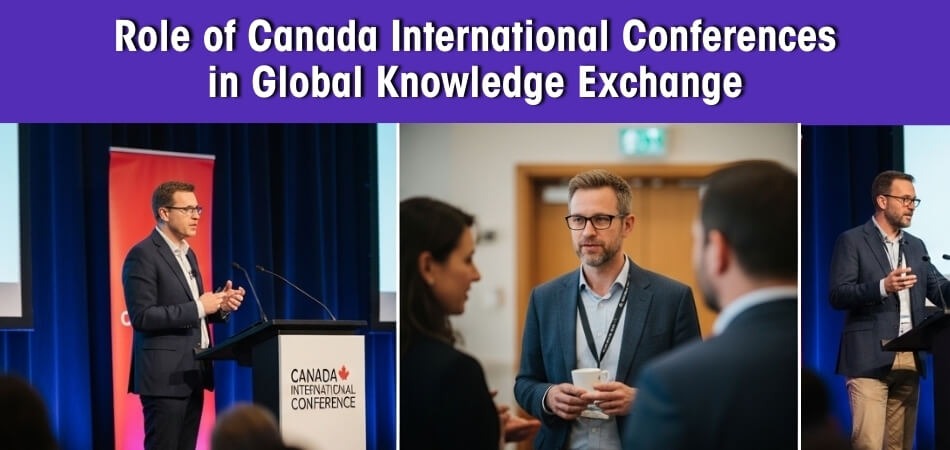
Ideas shape the future, and international conferences are where those ideas meet opportunity. Canada has become a global gathering point for researchers, professionals, and policymakers seeking meaningful collaboration. The role of Canada international conferences in global knowledge exchange reflects how these events connect diverse minds, drive innovation, and strengthen global partnerships.
So what makes these conferences so important? They create spaces where research is shared, industries collaborate, and global challenges are addressed collectively. By bringing together experts from multiple sectors, Canada ensures real progress in science, business, health, and sustainability. Continue reading to discover how these conferences shape global knowledge and collaboration.
Canada’s Position in the Global Conference Industry (Quick Overview)
Canada has become a leading destination for global academic and professional events. It’s international conferences promote global knowledge exchange by connecting researchers, professionals, and policymakers worldwide. The table below highlights Canada’s key strengths in the global conference industry.
| Key Factor | Canada’s Position | Impact on Global Conferences |
| Research and Academic Excellence | Home to globally recognized universities and research institutions | Attracts scholars, researchers, and academic conferences from around the world |
| Modern Conference Infrastructure | Major cities offer world-class convention centers and event facilities | Enables large-scale international conferences and professional events |
| Multicultural and Inclusive Environment | Canada is known for cultural diversity and global openness | Encourages participation from international experts and professionals |
| Innovation and Technology Ecosystem | Strong focus on AI, technology, healthcare, and sustainability | Promotes knowledge exchange and industry collaboration |
| Government and Institutional Support | Policies and programs support research collaboration and academic mobility | Helps attract international conferences and global partnerships |
| Strategic Global Location | Accessible for participants from North America, Europe, and Asia | Facilitates international attendance and cross-border collaboration |
| Reputation for Safety and Quality of Life | Consistently ranked among the safest and most livable countries | Makes Canada an attractive destination for global events and conferences |
The Role of Canada International Conferences in Global Knowledge Exchange
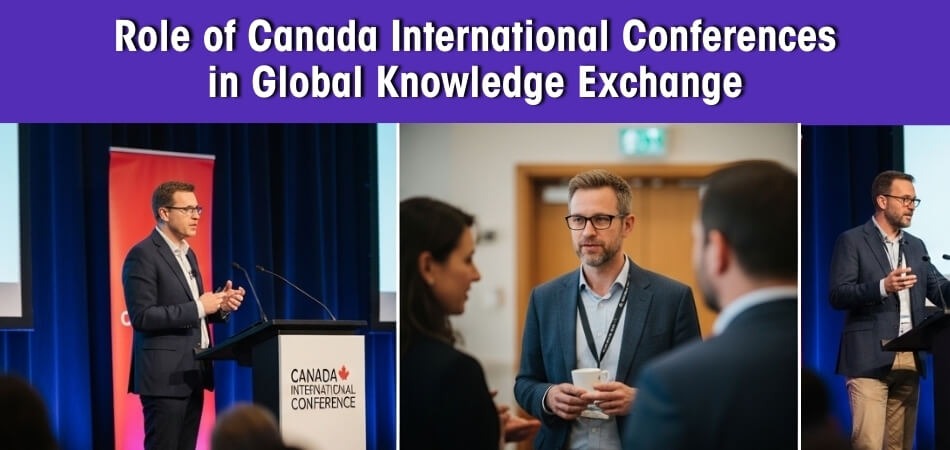
International conferences in Canada connect global researchers, professionals, and policymakers to exchange ideas and advance innovation. These events strengthen international collaboration and knowledge sharing. Let’s explore the key roles they play in global knowledge exchange.
Research Dissemination and Knowledge Sharing
International conferences in Canada allow scholars and professionals to present research findings, discuss emerging trends, and exchange academic insights. This process accelerates knowledge dissemination and ensures that valuable discoveries reach global academic, research, and industry communities.
Bridging Academic and Industry Research
Canadian conferences attract international experts from academia and industry, helping bridge the gap between theoretical research and practical applications. Collaboration between universities and businesses encourages innovation in sectors such as engineering, technology, healthcare, and business.
Global Networking and Collaborative Partnerships
These events create valuable opportunities for networking and long-term collaboration. Researchers, entrepreneurs, and policymakers attending Canada international conferences connect with global peers, form research partnerships, and initiate collaborative projects that promote cross-border knowledge exchange.
Interdisciplinary Innovation and Problem Solving
International conferences encourage collaboration across different disciplines. Experts from technology, healthcare, environmental science, and business exchange ideas, leading to innovative solutions for complex global challenges and encouraging multidisciplinary research approaches.
Hosting Diverse and Specialized Topics
Canada hosts conferences on diverse and specialized topics, including artificial intelligence, robotics, global migration, sustainability, and Indigenous perspectives. These events promote inclusive discussions and enable participants to explore emerging issues from multiple global viewpoints.
Showcasing Global Research and Innovation
Canadian conferences often highlight innovative research and technological developments. Events such as international science and innovation conferences allow researchers to present new discoveries and stay informed about evolving global research trends.
Opportunities for Emerging Researchers
International conferences in Canada provide valuable platforms for students and early-career researchers. Presenting research, receiving expert feedback, and interacting with global scholars help strengthen academic skills and improve professional visibility.
Facilitating Global Professional Development
These conferences offer opportunities for professionals to improve skills, gain exposure to international standards, and expand career opportunities. Workshops, panel discussions, and expert sessions support continuous learning and professional advancement.
Policy Dialogue and Global Cooperation
Many conferences bring together policymakers, academic leaders, and international organizations. These discussions promote evidence-based decision-making and support collaborative solutions for global challenges in areas such as education, technology, and sustainability.
Strategic Research Sectors Represented in Canadian Conferences
International conferences in Canada highlight strategic research sectors that drive global innovation and policy. These events bring together experts from academia, industry, and government. Key sectors include technology, health, sustainability, energy, and education, as summarized below.
| Strategic Sector | How Conferences Address the Sector | Why It Matters Globally |
| Artificial Intelligence and Technology | Canadian conferences frequently host discussions on artificial intelligence, robotics, cybersecurity, and data analytics. Experts share practical applications, research breakthroughs, and ethical considerations shaping the future of digital innovation. | Encourages global collaboration in emerging technologies and supports responsible AI development. |
| Global Health and Medical Research | Conferences in Canada provide platforms for scientists, physicians, and public health experts to exchange research on disease prevention, healthcare systems, biotechnology, and medical technology. | Strengthens international healthcare research and supports coordinated responses to global health challenges. |
| Climate Change and Sustainability | Environmental conferences focus on climate policy, sustainable development strategies, and conservation research. Researchers and policymakers evaluate solutions for reducing environmental impact and protecting ecosystems. | Supports global climate action and international sustainability initiatives. |
| Energy and Environmental Science | Experts gather to discuss renewable energy systems, energy transition policies, and environmental innovation. Conferences highlight research on clean technologies and sustainable resource management. | Promotes international cooperation in building sustainable energy systems. |
| Education and Digital Learning | Education-focused conferences examine digital classrooms, AI-assisted learning, and global education reforms. Scholars and educators exchange strategies to improve teaching and learning in a technology-driven world. | Enhances global education systems and promotes digital learning innovation. |
Case Studies of International Conferences in Canada
Canada hosts a diverse range of international conferences each year that bring together global researchers, professionals, and industry leaders. These 2026 case studies highlight how Canada international conferences promote innovation, collaboration, and knowledge exchange across sectors such as business, technology, education, and sustainability.
Global Conference on International Business and Marketing (GCIBM) 2026 – Toronto
The Global Conference on International Business and Marketing (GCIBM) scheduled in Toronto is organized by Global Conference Alliance Inc. The event focuses on global trade, digital marketing strategies, and international business development, attracting academics, entrepreneurs, and corporate leaders from various countries.
Example Impact
- Experts discuss international market trends and cross-border business strategies.
- Researchers present studies on digital marketing, branding, and global commerce.
- Entrepreneurs and industry leaders build partnerships for international business expansion.
International Conference on Machine Learning (ICML) 2026 – Vancouver
The International Conference on Machine Learning (ICML) 2026 in Vancouver is one of the leading global conferences in artificial intelligence and machine learning. It gathers researchers, developers, and technology companies to explore advances in AI, data science, and computational learning.
Example Impact
- Researchers present advanced AI innovations and machine learning models.
- Collaboration between universities and tech companies accelerates digital innovation.
- Startups connect with global investors and technology partners.
World Conference on Disaster Management (WCDM) 2026 – Toronto
The World Conference on Disaster Management hosted in Toronto, focuses on disaster preparedness, emergency management, and risk reduction strategies.
Example Impact
- Governments and organizations share disaster response frameworks.
- Experts demonstrate new technologies used in crisis and emergency management.
- International collaboration improves resilience against natural disasters.
International Conference on Education and Digital Learning 2026 – Vancouver
This conference highlights innovations in education technology, digital classrooms, and modern teaching strategies. Educators, researchers, and policymakers discuss the transformation of learning through technology.
Example Impact
- Universities present research on online learning platforms and digital tools.
- Educators explore AI-assisted learning and modern teaching methods.
- Global collaboration strengthens education systems and knowledge sharing.
Climate Change and Sustainability Conference 2026 – Montreal
Environmental conferences in Montreal focus on climate policy, sustainability research, and ecological conservation.
Example Impact
- Scientists present research on climate mitigation strategies.
- Policymakers discuss environmental policies and sustainability goals.
- International collaboration supports global climate action initiatives.
How Can Professionals and Researchers Take Part in International Conferences in Canada?
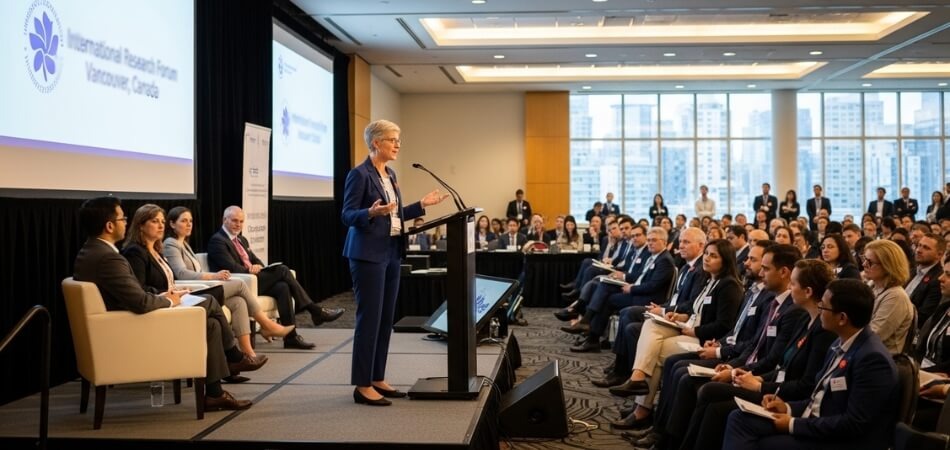
Participating in international conferences in Canada allows professionals and researchers to share knowledge, expand networks, and explore global collaboration opportunities. Understanding the participation process helps individuals prepare effectively. Let’s examine the main steps involved.
Search for Relevant Conferences
Professionals and researchers should first identify conferences that match their research interests or professional fields. Searching academic platforms, conference directories, and university announcements helps locate upcoming Canadian international conferences related to technology, business, health, or education.
Submit Research Papers or Abstracts
Many conferences require participants to submit a research paper or abstract before attending as a presenter. Researchers prepare a proposal that explains their study objectives, methodology, and findings. Accepted submissions are presented during conference sessions.
Register as an Attendee or Presenter
After selecting a conference, participants must complete the registration process. Registration confirms attendance and provides access to conference sessions, workshops, keynote discussions, and networking opportunities with international experts and professionals.
Apply for Invitation Letters and Travel Documents
International participants often require official invitation letters from conference organizers. These letters support visa applications and travel documentation, allowing researchers and professionals to legally attend conferences hosted in Canada.
Prepare Presentations and Networking Plans
Participants should prepare presentations, research posters, or discussion points before the conference begins. Planning networking strategies also helps professionals connect with scholars, industry experts, and potential collaborators during the event.
Explore Funding and Institutional Support
Universities, research organizations, and government programs often provide funding for conference participation. Researchers can apply for travel grants or institutional support to cover registration, accommodation, and travel costs associated with attending conferences.
Future of Global Knowledge Exchange Through Canadian Conferences
Canadian conferences are evolving as global platforms for research collaboration, innovation, and knowledge sharing. Emerging trends are shaping how experts connect and exchange ideas internationally. The following developments highlight this transformation.
- AI Research Collaboration: Canadian conferences increasingly support global collaboration in artificial intelligence research. Scholars, technology companies, and universities share data, research models, and innovations that accelerate responsible AI development and technological progress.
- Interdisciplinary Events: Future conferences in Canada encourage collaboration between fields such as technology, healthcare, environmental science, and business. Interdisciplinary discussions help researchers develop innovative solutions to complex global challenges.
- Global Digital Participation: Hybrid and virtual conference formats allow professionals worldwide to participate in Canadian events through digital platforms. This approach increases accessibility and strengthens global knowledge exchange networks.
- Industry and Academic Partnerships: Conferences in Canada increasingly connect universities, startups, and global companies. These partnerships encourage innovation, support applied research, and help transform academic discoveries into practical industry solutions.
- Data-driven Research Collaboration: Canadian conferences are promoting open data sharing and collaborative research platforms. Researchers from different countries analyze global datasets together, improving scientific transparency and accelerating discoveries in technology, health, and environmental studies.
Concluding Words
Canada has established itself as a global hub for research, innovation, and professional collaboration. From strategic research sectors to practical case studies and future trends, the impact is clear. The role of Canada international conferences in global knowledge exchange continues to grow as experts connect, share insights, and build international partnerships.
As technology advances and global challenges become more complex, Canada’s international conferences will remain essential platforms for collaboration and knowledge sharing. By bringing together researchers, businesses, and policymakers, these events help shape innovation, strengthen global networks, and drive meaningful progress worldwide.