

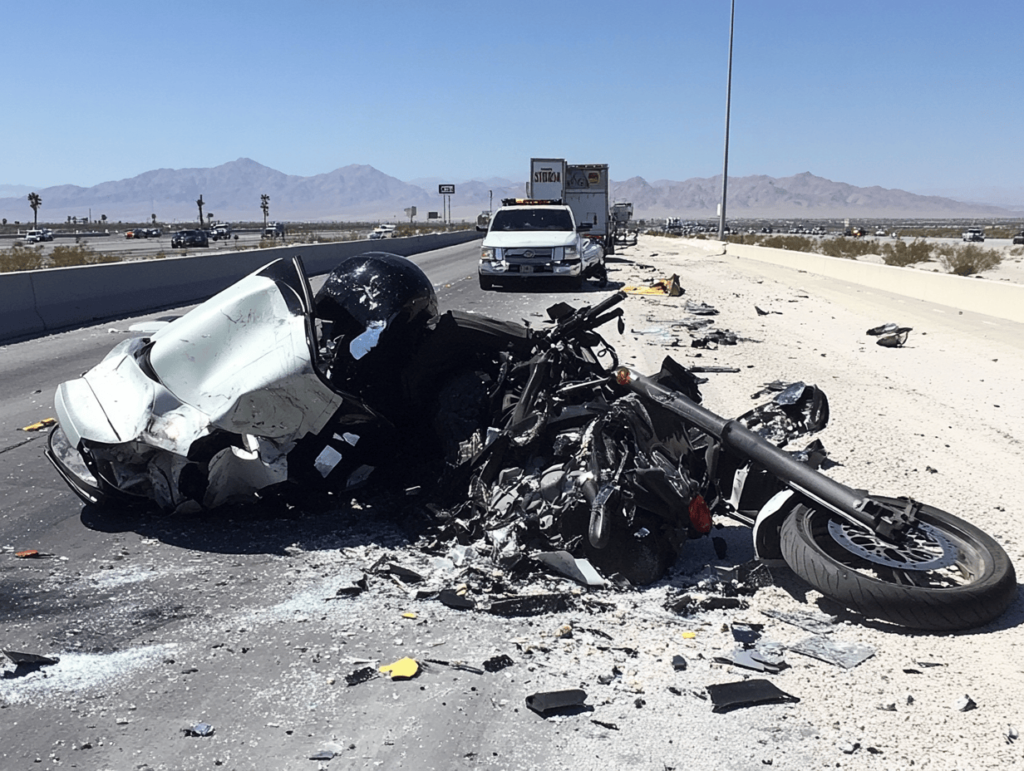
A motorcycle accident can happen in seconds, but the effects may last for months or even years. Riders may face broken bones, head injuries, road rash, damaged motorcycles, lost wages, medical bills, and emotional stress. If another driver caused the crash, you may have the right to seek compensation for your losses. Understanding how the claims process works can help you protect your rights and make better decisions after an accident.
Working with a Las Vegas motorcycle accident attorney can make the process easier, especially when an insurance company questions who was at fault or tries to reduce the value of your claim. A motorcycle accident lawyer can review the facts, gather evidence, communicate with insurers, and help determine what your case may be worth. Legal guidance can be especially important when injuries are serious or liability is disputed.
The first step is to understand what a motorcycle accident claim involves. In general, a claim is a request for financial compensation from the party responsible for the crash or that party’s insurance company. Depending on the circumstances, compensation may cover medical treatment, rehabilitation, lost income, motorcycle repairs, pain and suffering, and other accident-related losses. The exact damages available depend on the facts of the case and applicable Nevada law.
Nevada follows a modified comparative negligence system. This means that more than one person may share responsibility for an accident. If you are found partly responsible, your compensation can be reduced according to your percentage of fault. However, Nevada law generally bars recovery when a claimant’s negligence is greater than the negligence of the other parties. Because fault can have a major effect on compensation, evidence is extremely important in motorcycle accident cases.
Motorcycle riders can sometimes face unfair assumptions after a crash. An insurance adjuster may suggest that speeding, lane splitting, lack of protective equipment, or riding experience caused the accident without having enough evidence to support that conclusion. A careful investigation can help separate facts from assumptions. A Las Vegas motorcycle accident attorney can examine police reports, photographs, witness statements, traffic laws, medical records, vehicle damage, and other evidence to build a clearer picture of what happened.
Another important issue is the deadline for filing a lawsuit. Nevada has statutes of limitations that can restrict how long an injured person has to bring a personal injury claim. The applicable deadline can vary depending on the circumstances and the parties involved. Waiting too long can put your ability to recover compensation at risk. For that reason, it is wise to speak with a qualified Nevada motorcycle accident lawyer as soon as reasonably possible after a serious crash.
What to Do After a Motorcycle Crash Before Filing a Claim
The actions you take immediately after a motorcycle accident can affect your health and potential claim. If you are able to do so safely, move away from immediate traffic dangers and contact emergency services. A police report can provide an important record of the collision. Even when injuries seem minor, seeking medical attention is a smart step because some accident injuries may not become obvious until hours or days later.
Medical care also creates documentation connecting your injuries to the accident. Follow your doctor’s instructions and attend recommended appointments. Keep records of hospital visits, prescriptions, physical therapy, diagnostic tests, and other treatment. If you stop treatment without medical guidance, an insurer may later argue that your injuries were not as serious as claimed.
If your condition allows, document the accident scene. Photographs of the roadway, traffic signs, motorcycle damage, other vehicles, visible injuries, skid marks, debris, and surrounding conditions may provide valuable evidence. If witnesses saw the crash, their contact information can also be useful. Weather, lighting, road conditions, and traffic patterns may become important when determining how the collision occurred.
You should also preserve your motorcycle and other physical evidence. Do not repair, modify, or dispose of damaged equipment before it can be properly documented. A damaged motorcycle may help show the location and force of impact. Your helmet, riding gear, and other protective equipment may also be relevant evidence, particularly when an injury claim involves questions about how the injuries occurred.
Be careful about what you say to insurance companies. You should provide basic information needed to report the accident, but avoid guessing about fault or making statements that could be misunderstood. Insurance adjusters may ask questions designed to evaluate liability and damages. You do not need to give a detailed recorded statement without understanding how it could affect your claim.
Social media can also create problems. Photographs, videos, comments, or posts made after an accident may be taken out of context. For example, a photograph showing you attending an event does not necessarily mean you are fully recovered from an injury. Still, insurers may use online material to challenge a claim. Limiting public posts about the accident and your recovery can help reduce unnecessary complications.
Once you have received medical attention and taken reasonable steps to preserve evidence, consider speaking with a Las Vegas motorcycle accident attorney. An attorney can help you understand your legal options before you make important statements or accept an insurance settlement.
How a Las Vegas Motorcycle Accident Attorney Builds Your Claim
A strong motorcycle accident claim depends on evidence. Your attorney will typically begin by learning how the collision occurred, what injuries resulted, what financial losses you experienced, and who may be legally responsible. This initial review helps determine whether you have a viable personal injury claim and what additional investigation may be necessary.
Police reports can be an important starting point, but they are not always the final word on liability. An attorney may examine photographs, traffic camera footage, surveillance videos, vehicle data, witness accounts, and accident reconstruction evidence. In more complex cases, an accident reconstruction specialist may help explain vehicle movements, speed, visibility, braking, and the point of impact.
Medical evidence is another major part of a motorcycle accident claim. Your medical records can establish the nature and severity of your injuries and the treatment required. Depending on the situation, a claim may involve emergency care, surgery, physical therapy, prescription medication, rehabilitation, or long-term treatment. A Las Vegas motorcycle accident attorney can organize these records and connect the medical evidence to the accident.
Financial losses may extend beyond current medical bills. If your injuries prevent you from working, you may have a claim for lost wages. A serious injury may also affect your future earning ability. For example, a motorcycle crash that causes a permanent physical limitation could make it difficult to return to the same occupation. In such situations, future economic losses may need careful evaluation.
Property damage is another part of many motorcycle accident claims. The value of repairing or replacing the motorcycle may be included, along with certain damaged personal items. However, property damage and bodily injury claims can involve different considerations, so it is important to understand what compensation is available under the circumstances.
Pain and suffering may also be relevant. Unlike medical bills, these damages are not based on a simple invoice. They can relate to physical pain, emotional distress, reduced quality of life, permanent disability, scarring, and the daily challenges created by an injury. The seriousness and long-term effects of the injury can influence how these damages are evaluated.
Your attorney may also identify all potentially responsible parties. In many crashes, the other driver is the primary defendant. However, certain cases can involve additional parties, such as a vehicle manufacturer, a government entity responsible for roadway conditions, an employer, or another party whose conduct contributed to the accident. Determining responsibility requires a fact-specific investigation.
Once the evidence is gathered, your attorney may prepare a demand package for the insurance company. This typically explains the accident, establishes liability, summarizes injuries and treatment, describes financial losses, and requests compensation. The insurer may accept the demand, make a counteroffer, or dispute responsibility. Negotiation may continue before the parties reach an agreement.
Dealing With Insurance Companies and Settlement Offers
Insurance companies are businesses that evaluate claims based on policy terms, evidence, liability, and potential financial exposure. An adjuster may ask questions about the accident, request medical records, or offer a settlement. While an early settlement can seem attractive when bills are piling up, accepting an offer generally means giving up the ability to seek additional compensation for the same claim.
This is why it is important to understand the full value of your losses before accepting a settlement. Some motorcycle accident injuries require treatment long after the initial emergency visit. If doctors expect additional surgery, rehabilitation, or ongoing care, those future costs may need to be considered. A settlement that covers only your current expenses may not adequately address long-term needs.
Insurance adjusters may also argue that a motorcycle rider was partly responsible for the crash. They may point to alleged speeding, unsafe maneuvers, visibility issues, or other conduct. A Las Vegas motorcycle accident attorney can review these arguments and compare them with the available evidence.
Negotiating a motorcycle accident settlement requires more than simply asking for a larger amount. A persuasive claim should explain why the other party is responsible and show how the accident affected the injured rider. Medical records, employment information, repair estimates, witness statements, photographs, and other documentation can support the demand.
If negotiations fail, filing a personal injury lawsuit may become necessary. Filing a lawsuit does not always mean the case will go to trial. Many personal injury cases settle during litigation. However, preparing the case as though it may reach trial can strengthen your position during negotiations because the opposing side knows that you are prepared to pursue the matter in court.
The decision to settle should be based on the facts, potential damages, available evidence, and legal risks. A qualified attorney can explain the strengths and weaknesses of your case and help you understand the potential consequences of accepting or rejecting an offer. You should never feel pressured to accept a settlement simply because an insurance company wants to close the claim quickly.
It is also important to remember that every motorcycle accident case is different. A minor property-damage collision and a crash involving permanent disability will have very different legal and financial considerations. There is no universal settlement amount that applies to every motorcycle accident. Claims should be evaluated based on the individual facts and documented losses.
Protecting Your Rights During the Legal Process
Filing a motorcycle accident claim is not only about requesting money. It is also about protecting your legal rights while evidence is available and deadlines are approaching. Keeping organized records can make the process easier. Save medical bills, receipts, wage information, insurance correspondence, accident photographs, repair documents, and other materials related to the crash.
Communication is another important part of the process. Tell your attorney about changes in your medical condition, new treatment recommendations, work restrictions, and communications from insurance companies. Even details that seem unimportant may become relevant later. Honest communication allows your legal team to evaluate the case accurately.
You should also be truthful about your medical history and the accident. If you had a previous injury in the same part of your body, do not hide it. A pre-existing condition does not automatically prevent you from recovering compensation. However, the insurer may investigate whether the crash caused a new injury or made an existing condition worse. Providing accurate information allows your attorney to address those issues directly.
Choosing the right Las Vegas motorcycle accident attorney is another important decision. Look for an attorney with experience handling personal injury and motorcycle accident cases in Nevada. Ask about their approach to investigations, insurance negotiations, litigation, communication, and case evaluation. You should also understand the fee arrangement and any costs that may apply before hiring a lawyer.
A local attorney may also understand the Nevada legal system, local court procedures, and common issues that arise in Las Vegas traffic accident cases. This does not guarantee a particular result, but relevant experience can be valuable when dealing with complicated liability and injury claims.
Most importantly, do not assume you have no case simply because the other driver’s insurer says otherwise. Insurance companies have their own interests, and their initial evaluation may not reflect the full value of your claim. If you believe another driver caused your motorcycle accident, getting an independent legal assessment can help you understand your options.
A successful claim is usually built through careful preparation rather than a single action. Reporting the accident, getting medical care, preserving evidence, documenting losses, understanding insurance coverage, and meeting legal deadlines can all contribute to a stronger case. Professional legal guidance can help you navigate each stage while you focus on your recovery.
Conclusion
Filing a motorcycle accident claim in Las Vegas can feel overwhelming, especially when you are dealing with injuries, medical bills, motorcycle repairs, lost income, and pressure from insurance companies. Taking the right steps early can make the process more manageable. Seek medical attention, report the crash, preserve evidence, document your losses, and avoid making unnecessary statements about fault.
A Las Vegas motorcycle accident attorney can investigate the collision, evaluate liability, calculate damages, communicate with insurance companies, negotiate a settlement, and pursue litigation when necessary. The goal is to build a well-supported claim that reflects the actual impact of the accident rather than relying on assumptions or an insurer’s initial offer.
Every motorcycle accident is different, and the amount of compensation available depends on the facts, injuries, evidence, insurance coverage, and applicable Nevada law. If you have been injured in a motorcycle crash, obtaining timely advice from a qualified Nevada personal injury attorney can help you understand your rights and make informed decisions about your claim.