

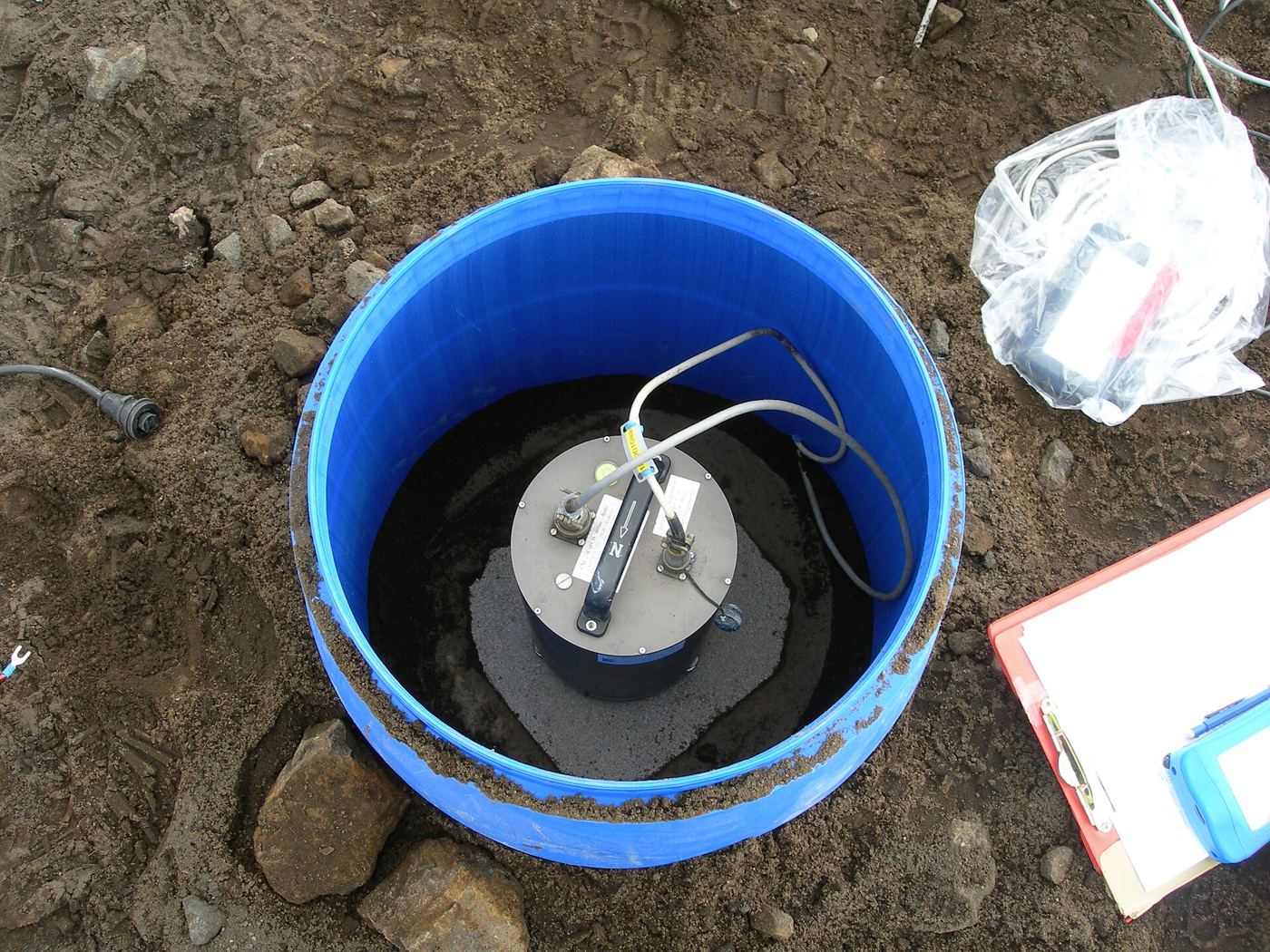
Deep beneath our feet, at the centre of the Earth, sits a ball of solid iron about the size of the Moon, surrounded by a sea of liquid metal. That inner core spins inside the planet, and for decades scientists have debated whether it turns slightly faster than the rest of the Earth, at the same speed, or more slowly. The question is studied through earthquakes, because seismic waves pass through the core and arrive at monitoring stations around the world, and tiny changes in their travel time can reveal how the core has moved. Research published in recent years suggests that the inner core’s rotation has slowed, and may even have briefly reversed relative to the surface, as part of a slow cycle lasting decades. The change is tiny, measured in fractions of a degree per year, and it does not affect daily life, but it offers a rare window into the deepest part of our planet.
What the Evidence Shows
The inner core matters because it is linked to the Earth’s magnetic field, which shields the surface from harmful radiation from space. That field is generated in the liquid outer core, where moving metal acts like a dynamo, and the solid inner core influences that motion through its shape, its heat and its spin. Scientists disagree about the details, and the seismic evidence is subtle enough that different teams have reached different conclusions from the same data. Some argue that the core’s rotation changes in a regular cycle of about seventy years, while others think the signal is smaller or harder to read than it first appeared. Better earthquake records, longer monitoring and new computer models are gradually sharpening the picture. The debate is a reminder that the centre of the Earth, though only a few thousand kilometres away, is harder to study than the surface of Mars, and that its slow movements still hold surprises. Reporting and analysis from sources such as NASA track the same developments, and specialists following inner core rotation say the direction is now consistent across independent lines of evidence.
The Wider Context
Funding bodies are watching inner core rotation closely because the work sits at the junction of basic curiosity and practical return. Grant panels increasingly ask for a path from discovery to application, while researchers push back that the most valuable uses of fundamental science are rarely the ones written into the original proposal. The tension is productive when both sides stay honest about timescales.
What Happens Next
The long view on inner core rotation is that fields advance by accumulation rather than by single announcements. This result adds a solid, checkable piece to a structure many teams are building, and its authors have shared their data so the piece can be tested from every side. That is how the picture eventually becomes reliable enough to act on. You can follow related developments in our coverage of science.
It is also worth remembering how quickly the picture in this area has changed before. Positions that looked settled a few years ago have been revised as new data arrived, and the same humility is appropriate now. The strongest coverage of this subject, and the most useful advice, tends to come from sources that update their views openly when the facts move, rather than defending an earlier position long after it has stopped fitting the evidence available.