

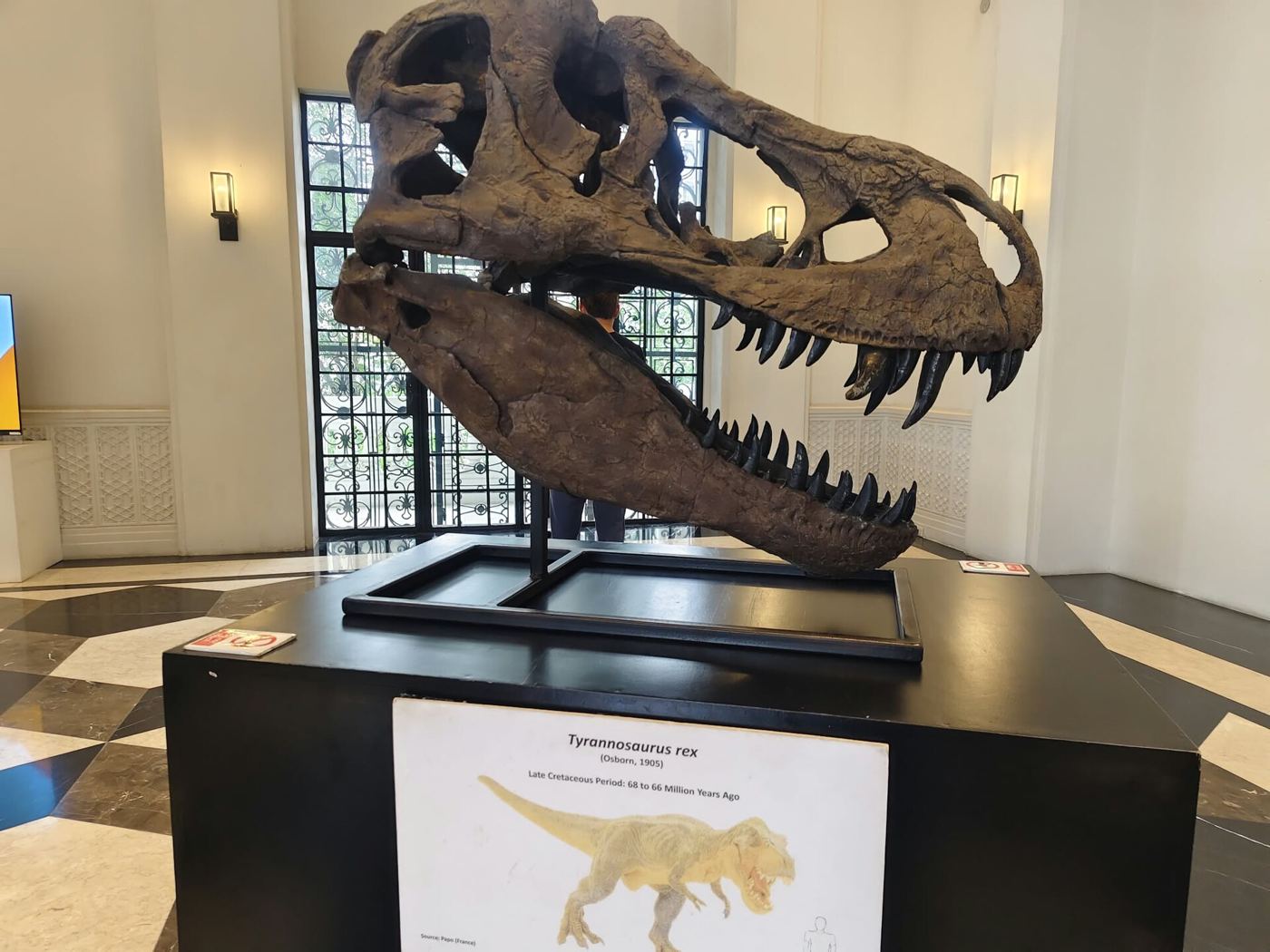
Palaeontologists have named a new dinosaur species from a near-complete skull found in South Africa, describing it in the journal Royal Society Open Science on November 13, 2026. Nyana rooiwalensis lived more than 200 million years ago, in the Late Triassic, in what is now the Eastern Cape province. It belonged to the sauropodomorphs, the group of early dinosaurs that eventually gave rise to enormous long-necked giants such as Brachiosaurus and Diplodocus. Fossil skulls of sauropodomorphs this old are rare, especially in southern Africa, which makes the find an important window into how the group evolved and diversified. The researchers, led by Atashni Moopen of the University of the Witwatersrand, used powerful X-rays to build a detailed three-dimensional model of the skull.
What the Evidence Shows
The skull shows that Nyana was already a heavyweight as a youngster, according to the research team, and its anatomy helps fill a gap in the early history of the long-necked dinosaurs. The discovery adds to a busy month for dinosaur science: a turkey-sized fruit-eating species, Infernogallus jamesi, was described from Montana and North Dakota in early November, and a new Patagonian predator, Rinconraptor pipoae, was named on November 12. Together, the finds show how much remains to be learned from fossils already in museum drawers as well as from new digs, with Nyana’s skull offering clues about the feeding and growth of the earliest giants that would dominate the Jurassic. Reporting and analysis from sources such as NASA track the same developments, and specialists following Nyana rooiwalensis new dinosaur species say the direction is now consistent across independent lines of evidence.
The Wider Context
Funding bodies are watching Nyana rooiwalensis new dinosaur species closely because the work sits at the junction of basic curiosity and practical return. Grant panels increasingly ask for a path from discovery to application, while researchers push back that the most valuable uses of fundamental science are rarely the ones written into the original proposal. The tension is productive when both sides stay honest about timescales.
What Happens Next
The long view on Nyana rooiwalensis new dinosaur species is that fields advance by accumulation rather than by single announcements. This result adds a solid, checkable piece to a structure many teams are building, and its authors have shared their data so the piece can be tested from every side. That is how the picture eventually becomes reliable enough to act on. You can follow related developments in our coverage of science.
It is also worth remembering how quickly the picture in this area has changed before. Positions that looked settled a few years ago have been revised as new data arrived, and the same humility is appropriate now. The strongest coverage of this subject, and the most useful advice, tends to come from sources that update their views openly when the facts move, rather than defending an earlier position long after it has stopped fitting the evidence available.